


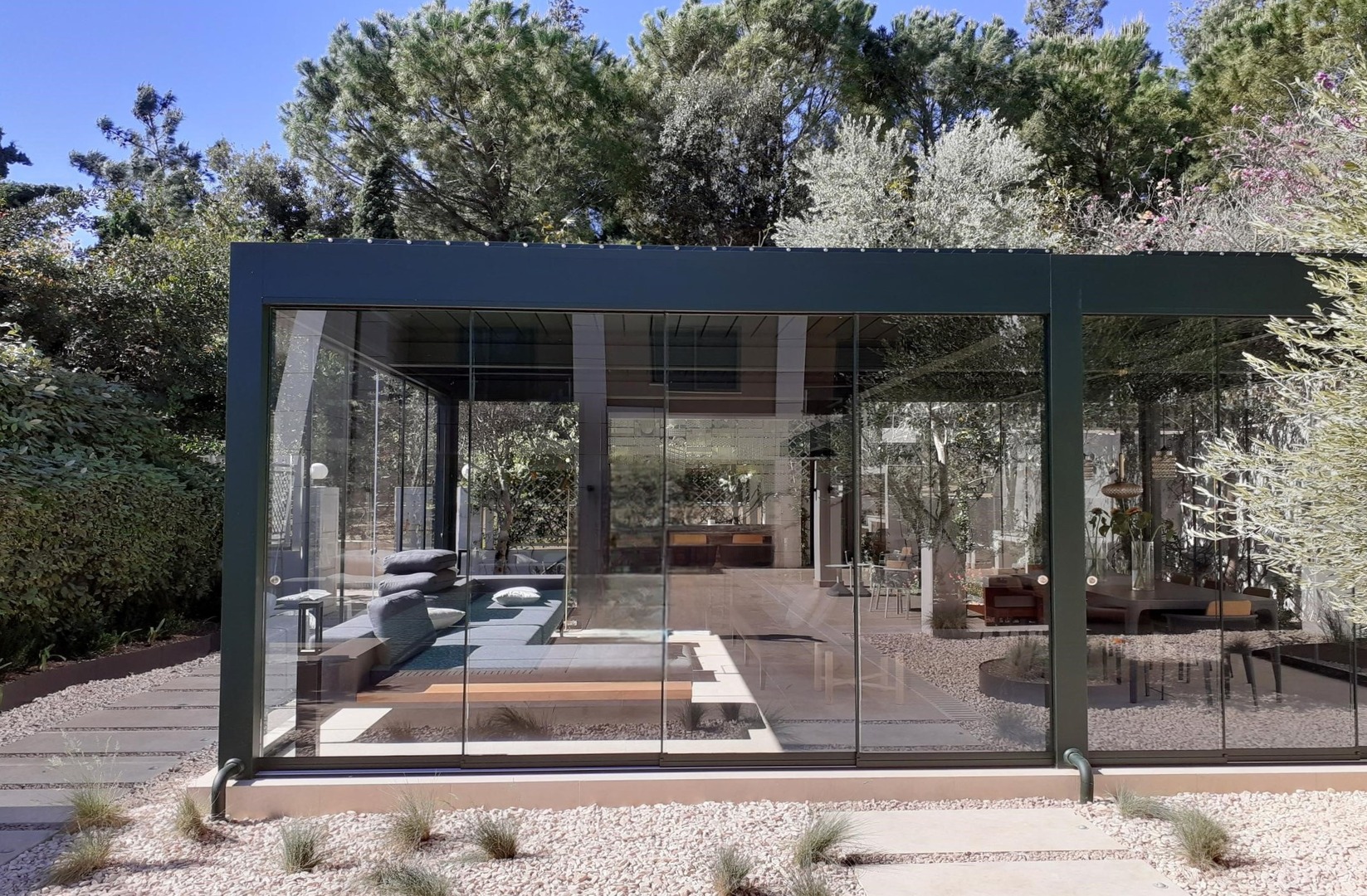
The outdoor living category has moved from discretionary extra to revenue-defining specialism in five years. Structures that used to sit at the bottom of a homeowner’s wishlist now sit at the top, the average project value in the premium segment has tripled, and builders who can deliver an aluminium bioclimatic pergola end-to-end are quoting work months ahead. This article makes the business case, then walks through the practical steps to build a profitable pergola installation business alongside an existing construction or landscaping practice.
The market is structurally larger
Three independent data sets confirm that outdoor living is no longer a niche.
The National Association of Home Builders reports that 61.8 percent of single-family homes started in the United States in 2024 included a patio. Future Market Insights values the global outdoor living structure market at USD 3.30 billion in 2025 and forecasts it reaching USD 6.60 billion by 2036. In the United Kingdom, the 2025 Houzz and Home Renovation Trends Study found that half of renovating homeowners enhanced their outdoor spaces in 2024, with 11 percent installing a gazebo or pergola. The Horticultural Trades Association’s August 2025 Market Update confirmed that garden furniture sales in UK garden centres rose 42 percent in July 2025 versus July 2024.
These are not residual post-pandemic numbers. They reflect a permanent shift in how households allocate home improvement budgets — and that shift is mirrored in commercial demand from restaurants, hotels, and rooftop venues that have learned an extended outdoor season translates directly to increased covers and average spend per head.
Why pergolas are the highest-margin structure a builder can add
Most construction work is priced against well-published benchmarks, which compresses margin over time. Aluminium bioclimatic pergolas behave differently, for three reasons.
First, the client is buying a lifestyle outcome, not a commodity. That distinction sustains value-based pricing. Industry data shows manufacturing cost typically represents 30 to 35 percent of the final price of a premium aluminium pergola, with dealer markup at 25 to 35 percent and installation services accounting for 15 to 25 percent of project value. A building or landscaping business that installs without holding product earns gross margin in the 20 to 30 percent range. A business that becomes an authorised dealer of a manufacturer such as GLM Outdoor Solutions adds the dealer margin on top of the install margin.
Second, the average ticket is high and rising. A standard aluminium pergola may cost the homeowner under USD 7,000, but a custom pergola with automated blinds, glass walls, and integrated LED can exceed USD 50,000. UK bespoke installations start at GBP 1,250 per square metre for premium systems. Few additions to a builder’s portfolio raise the average project value as quickly.
Third, the upgrade path is rich. Once the base structure is sold, vertical screens, sliding glass walls, integrated lighting, heaters, and audio integration are add-on revenues with healthy margins. Restaurants and hotels typically specify automation, wind and rain sensors, and links to building management systems — all of which compound the order value on a single contract.
Choosing the right trade partnership
Three commercial models are available: independent installer, authorised dealer, or vertically integrated manufacturer-installer. For most builders entering the market, the authorised dealer model is the right entry point.
As an authorised dealer of a manufacturer such as GLM Outdoor, the builder receives technical training, CAD and BIM resources, marketing collateral, and access to the manufacturer’s Find a Partner tools that route inbound leads to local installers. Trade pricing is offered on a fully tested and certified product. The manufacturer carries the engineering liability for the system — conformity to EN 13561 in the UK and ASTM E330 in the United States — while the builder carries the installation liability. That split is structurally cleaner than self-fabricating, which exposes a builder to performance liability they are not insured to carry.
When evaluating a manufacturer partnership, look for five things:
- Quality certifications, including ISO 9001 and CE marking
- Published Declarations of Performance and Declarations of Conformity
- A defined partner programme with clear territory and lead-flow rules
- Technical training availability in-market or on-site
- A minimum ten-year structural warranty on the frame, plus a separate motor warranty
GLM publishes all of these openly across its product pages.
Workflow for a profitable pergola installation business
The structure of the workflow matters more than the tools it runs on — because it determines whether each project produces a margin or absorbs one.
The sales conversation begins with a site visit that captures span, attachment type, drainage access, electrical supply route, and surface condition. A configurator such as GLM’s Build Your Own Pergola tool allows the builder to produce a 3D visual and a quote on the same day, which materially raises close rates compared with returning quotes several days later.
Procurement runs through the manufacturer’s dealer portal. Typical lead times for European-manufactured aluminium pergolas are four to eight weeks for stock colours and eight to twelve weeks for custom RAL colour or wood-effect finishes. Build this into the client agreement from the outset.
Installation is where margin is won or lost. The aluminium system arrives in modular profiles engineered for one to three days of assembly on a residential frame. The substrate must be prepared in advance — typically with concrete pads of around 40 × 40 × 40 cm beneath each column, or equivalent footings sized for local frost depth. Where groundworks are outside the builder’s own scope, partnering with a local landscaper as a sub-trade preserves margin and eliminates handover gaps.
After-sales is the second margin layer. Annual maintenance contracts covering louvre mechanism inspection, motor seal checks, gutter cleaning, and software updates run at GBP 200 to GBP 400 per visit and generate recurring revenue that smooths seasonal cash flow across the year.
Diversifying the customer base
A builder with an established pergola service line should not stop at private residential. Three additional verticals broaden the order book meaningfully.
Hospitality is the highest-volume commercial market. Restaurants and rooftop bars install bioclimatic pergolas to extend trading seasons and weatherproof outdoor dining areas. Commercial installations commonly land between USD 30,000 and USD 100,000 each. The sales cycle is longer than residential, but project values and reorder potential are substantially higher — a hotel group that adds pergolas to one property typically expands across others.
Property developers are the second vertical. Developers building premium suburban and urban schemes increasingly write pergolas into the show home specification and offer them as buyer upgrades. A trade installer with an established manufacturer relationship can negotiate site-wide framework agreements that secure future units before individual sales launch.
Local authorities and the public sector commission outdoor structures for parks, schools, and town centre improvements. Public procurement requires CE marking, certified performance documentation, and typically public liability insurance at GBP 5 million or above. A builder with the right paperwork in place wins this work uncontested against less-prepared competitors.
How to launch the service line
A builder entering this market should sequence the launch over six months:
- Month 1: dealer selection and contract signature
- Month 2: technical training and tool preparation
- Month 3: first pilot installation on a known client property, where all variables are controlled
- Months 4 to 6: dedicated landing page, updated Google Business Profile, two case studies, and a completed listing on the manufacturer’s Find a Partner tool
The benchmark that signals success is gross margin per project, not turnover. A well-run pergola installation business should target 35 to 45 percent gross margin on structure plus install, with annual maintenance generating an additional 60 percent margin. If gross margin is below 30 percent after six months, the issue is usually procurement coordination or installation inefficiency absorbing what should be retained.
Outdoor living is no longer the optional item at the end of the brief. For builders willing to invest in a manufacturer partnership and a repeatable installation process, it is among the most profitable service categories available — and the market data in the UK, USA, and Canada points firmly to continued expansion.
Find out how to become a GLM Outdoor partner and access the full dealer programme at glm-outdoor.com.